


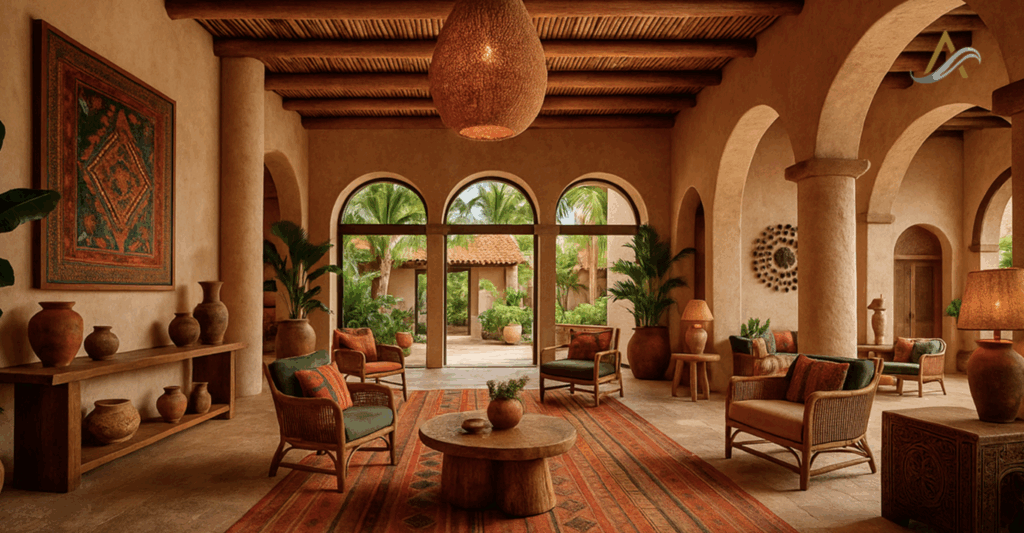
What does the future of hotel design look like?
The answer is in three words: feel, flow, and belong.
In 2025, hotel design goes far beyond aesthetics.
It's no longer just about offering beautiful rooms or impressive lobbies.
Today, travelers—especially in destinations like San José del Cabo, Cancún, or Playa del Carmen—are looking for something deeper:
an emotional, functional, and conscious experience from the moment they walk through the door.
Why does design matter in the hotels of the future?
Well-executed design:
- Increases perceived value
- Builds guest loyalty from the first impression
- Impacts ratings on platforms
- Facilitates daily hotel operations
- Becomes a competitive differentiator in saturated tourism markets
5 key trends in hotel interior design for 2025
1. Sustainability as the new standard of luxury
Sustainability is no longer a differentiator: it's an expected minimum.
Guests value environmentally responsible spaces that don't sacrifice aesthetics or comfort.
Current applications:
- Use of certified woods, recycled textiles, and natural finishes
- Water and energy-saving systems
- Integration of natural vegetation indoors and outdoors
- LED lighting, solar panels, and energy automation
2. Hybrid spaces: transforming lobbies
The lobby is no longer just a place of transit.
It now serves multiple functions: a café, a meeting room, a meeting point, and a gallery.
Elements that enable this:
- Modular furniture
- Zones differentiated by lighting and acoustics
- Sensory décor and warm materials
- Connectivity and discreet technology
3. Total well-being: rooms designed for complete rest
The new guest isn't just looking to sleep; they're looking to renew themselves.
The room is a physical and emotional sanctuary.
Keys to wellness design:
- Neutral colors and natural textures
- Bed as a centerpiece (ergonomics, quality linens, indirect lighting)
- Spa-like showers, integrated aromas, soundproofing
- Circadian lighting that follows the body's cycle
4. Integrated and invisible technology
The challenge isn't having more technology, but rather making it disappear behind a seamless experience.
Current trends:
- Contactless check-in
- Room control via app or voice
- Invisible USB ports and wireless chargers
- Mirrors with integrated screens, presence sensors, and ambient customization
5. Local design, without clichés
The modern traveler seeks authenticity.
Design that connects is one that reflects local culture without being obvious or touristy.
How to achieve this?
- Collaboration with local artisans
- Use of regional materials
- Visual narratives in art, textures, and furniture
- Architecture adapted to the climate, context, and history of the place
Who should pay attention to these trends?
This approach is aimed at:
- Hotel owners looking to update their concept
- Operations or maintenance managers who need to facilitate day-to-day operations
- Purchasing and F&B managers seeking visual and functional coherence
- Resort developers in the pre-sales or expansion phase
At Ascendencia, we design hotels that are lived, remembered, and recommended
Design isn't just for eye-pleasing.
It's a strategic tool that works for your brand, your operations, and the guest experience.
Is your hotel project ready to evolve?
Contact us via WhatsApp Business. and let's design your brand's next great experience together.
At Ascendencia Interior Design, we design hotels and tourism projects aligned with 2025 trends,
with a local focus, global functionality, and aesthetic sensibility.