
Functionality with purpose: when design solves, it doesn't just decorate
At interior design, functionality doesn't just mean that everything "fits" or "looks pretty."
It means that each element has a purpose, solves a real need, and enhances the experience of those who inhabit the space.
This principle is especially vital when we talk about hotels or vacation properties, where spaces must be intuitive, efficient, and pleasurable for hundreds of different users each month.
What is a functional space?
A functional space is one that responds to its uses without effort or friction.
This implies much more than a good layout: it is the sum of aesthetics, logic, ergonomics, and operation.
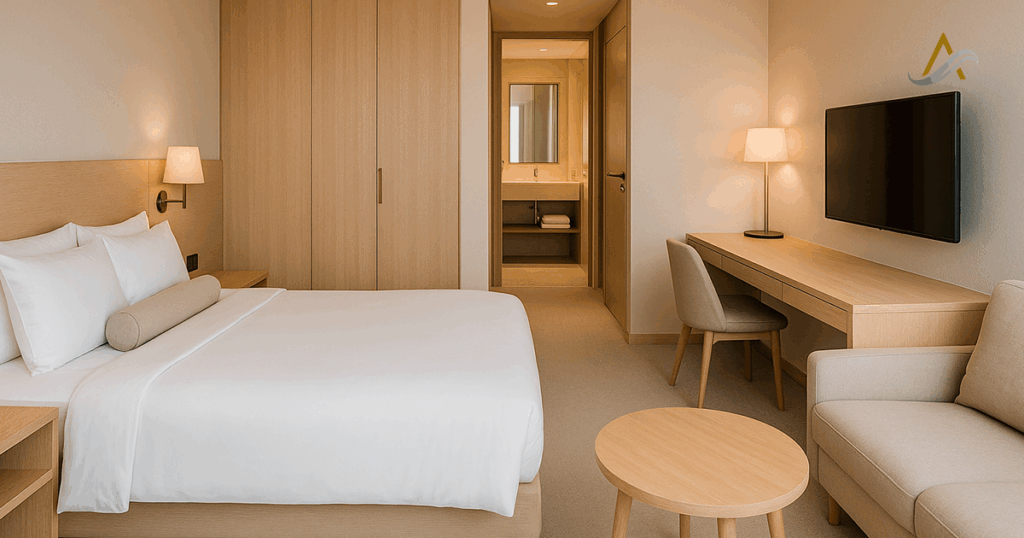
- In a hotel: that the guest intuitively knows how to use the room, without searching for light switches.
- In an Airbnb: that the space should explain little and solve a lot.
- In both: that the design accompanies, not complicates.
Fundamentals of Functionality in Interior Design
1. Logical Space Layout
A good design should facilitate movement, orientation, and use of each area.
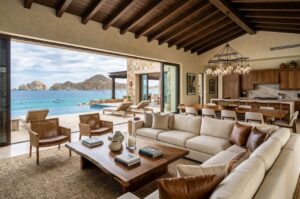
- Separate seating areas from social areas
- Natural flow between kitchen, dining room, and living room
- Easy, unobstructed access
2. Ergonomics Designed for the Guest
It's not just about having a sofa...
It's about having the right sofa for the type of user and the intended use.
- Comfortable bed heights
- Tables at the correct height
- Power outlets where needed
- Functional lighting, not just decorative
3. Multifunctional Furniture
Especially in short-stay spaces or spaces with limited square footage.
- Beds with storage
- Tables that double as desks
- Stackable chairs or benches that blend into the decor
4. Durable, Easy-to-Maintain Materials
Beauty shouldn't be at odds with durability.
In properties with high turnover, it's key to use materials that are:
- Resistant to moisture and heat
- Washable or stain-resistant
- Maintain their appearance over time
5. Invisible and well-integrated technology
Functionality also means avoiding visible cables, complicated controls, or accessories that raise questions.
- Simple automation
- Accessible thermostats
- Zone lighting or well-placed sensors
Key differences: hotel vs. vacation property
Durability: Very high turnover / Medium or high turnover
Flexibility: 100% temporary use / Can be occasional or mixed
Design: More standardized / Can be more personalized
Amenities: Included services / Kitchen and autonomy expected
Guest expectations: Immediate comfort / Experience + feeling of home
Common mistakes when designing without functionality
- Prioritizing aesthetics without considering use
- Choosing materials solely for fashion
- Decorative lighting without function
- Purposeless fixtures that clutter the space
- Not considering the experience from the entrance
Key questions before designing or remodeling
- Who will use this space and how will they navigate it?
- What activities will take place here?
- Are there current operational friction points?
- What storage or flow solutions do you need?
- Does this space work with the user… or against them?
And how do you achieve all this without complicating things?
Applying these principles requires knowledge, experience, and strategy.
This is where many projects fail: they have good intentions, but not a purposeful design.
At Ascendencia, functionality is the silent soul of design.
We don't design to impress...
We design so that each space functions as it should, excites you the way you want, and works with you.
Are you designing, remodeling, or renting a space and want it to truly work?
Contact us via WhatsApp Business. and discover how to turn every corner into a functional and beautiful experience.